Metal roofing for a hail-exposed metro
Standing seam and exposed-fastener systems, including the insurance question you should ask before you buy one.
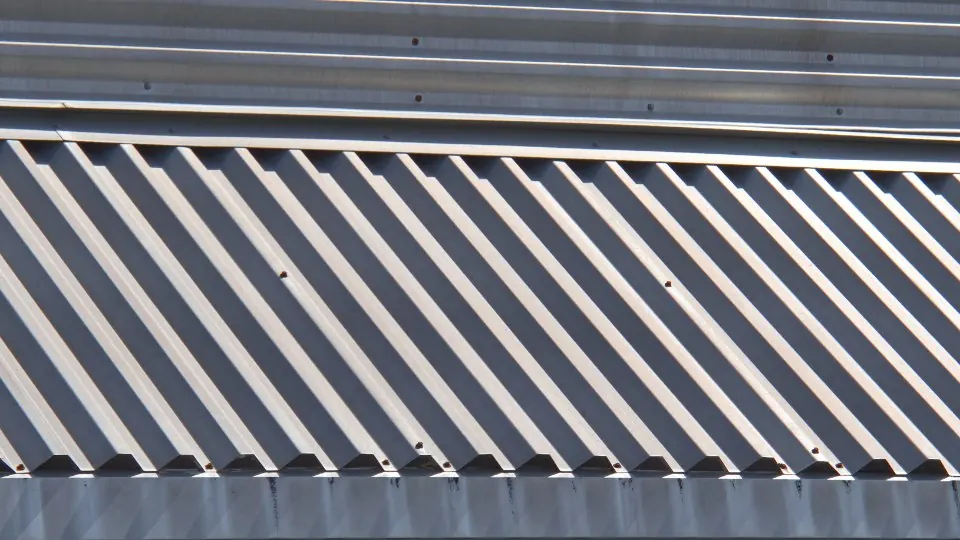
Metal roofing runs roughly $700 to $1,200 per square (100 sq ft) installed, putting standing seam and premium systems at $20,000 to $45,000+ on a typical DFW home. That is materially more than architectural asphalt up front.
The case for it in this metro is not aesthetics. It is that Dallas-Fort Worth sits in Hail Alley and records roughly three to six damaging hail events in a typical year, and the replacement-cycle arithmetic looks very different when the roof you are buying is not the one that fails first.
Last reviewed 15 August 2026
Standing seam versus exposed fastener
The distinction matters more than gauge or colour, and it is where most of the price difference sits.
| Standing seam | Exposed fastener | |
|---|---|---|
| Fasteners | Concealed within the seam | Screwed through the panel face |
| Main failure mode | Panel or seam damage; rare | Washer degradation at each screw |
| Thermal movement | Clips allow panels to move | Fixed penetrations resist movement |
| Maintenance | Minimal | Periodic fastener inspection |
| Typical use | Residential, architectural | Agricultural, outbuildings, budget |
Thermal expansion is not a footnote in North Texas. Summer surface temperatures on a dark roof regularly exceed 100°F ambient by a wide margin, and a metal panel expands and contracts across every one of those cycles. Standing seam is designed around that movement; exposed-fastener systems resist it, and the washers at several hundred penetration points are what eventually give up.
Metal in a hail market: the honest version
Metal roofing is highly impact-resistant, not hail-proof. A severe event can cosmetically dent panels without compromising the water barrier at all, which raises a question worth asking your insurer before you buy, because some policies exclude cosmetic damage to metal roofing. That exclusion can be the difference between a covered claim and a denied one on an otherwise identical roof.
We raise this because it is the single most common thing a homeowner discovers too late about a metal roof, and no roofing company’s sales page mentions it. Whether your policy carries a cosmetic-damage exclusion is a question only your carrier can answer.
What drives metal roofing cost
- Panel system (standing seam vs exposed fastener)
- Gauge and finish
- Roof complexity
- Structural considerations
Per-square ranges sourced from published 2026 DFW market data. See the cost page for the full source list.
Where metal earns its money
- Service life: measured in decades rather than the 15–25 years an asphalt roof gets in this climate, especially where hail keeps resetting the clock.
- Heat: reflective finishes reduce the summer cooling load, which is a real line on a North Texas utility bill from May to September.
- Wind, a properly clipped standing seam system has no shingle edge for wind to lift.
- Not being re-roofed every hail cycle, the argument that actually matters here.
Questions about this service
How much does a metal roof cost in DFW?
Roughly $700 to $1,200 per square (100 sq ft) installed, which puts standing seam and premium systems at $20,000 to $45,000+ on a typical home.
Panel system, gauge and finish, roof complexity and structural considerations all move that figure. The ranges come from published 2026 DFW market sources, listed on our cost page.
Is a metal roof hail-proof?
No. It is highly impact-resistant, which is not the same thing.
Severe hail can dent panels cosmetically without compromising the water barrier. Ask your insurer whether your policy excludes cosmetic damage to metal roofing before you buy, some do, and it changes the risk calculation considerably.
Standing seam or exposed fastener?
Standing seam for a residence, in almost every case.
Its fasteners are concealed and its clips allow the panels to move through North Texas thermal cycling. Exposed-fastener systems put several hundred rubber washers on the weather side of the roof, and those washers are what eventually fail.
Will a metal roof make my house hotter?
No, the opposite, in most cases.
Reflective finishes lower the summer cooling load. The intuition that metal must be hotter comes from touching an uninsulated barn roof, not from how a modern residential system performs over a decked, ventilated assembly.
Does a metal roof affect cell phone signal?
Not meaningfully in most homes.
Signal reaches a house primarily through windows and walls rather than through the roof plane. Homes already at the edge of coverage may notice a difference; homes with normal reception generally do not.
Book the inspection.
We come out, walk the roof, photograph what we find with dates attached, and put an itemised estimate in writing. No pressure, and no contract signed on the doorstep.
Book an inspection
Tell us about the roof and we will come and measure it.
We never ask you to sign anything at the inspection. Texas law prohibits any roofer from paying or absorbing your insurance deductible, we will not offer to, and you should walk away from anyone who does.
Get a real number on your roof.
Measured, itemised, in writing.
A on-site inspection with dated photographs of what we find, followed by a written itemised estimate you can hold, compare, and submit yourself.